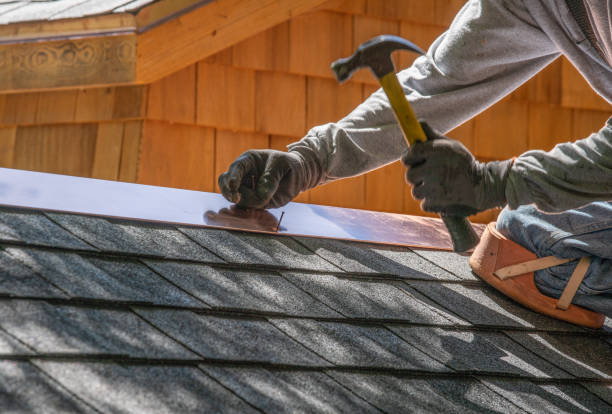
Copper Roof Shingles
There are basically two various types of copper roofing you can buy, there is the solid copper roof that consists solely of sheet copper on your roofing. All in all, the cost is likely to work out less than a slate roofing however when the copper roofing system shingles have aged and been weathered they will take on the splendid green look that only copper can create.
Can I use copper roof shingles?
One of the benefits that copper roof shingles offer over other forms of long-term roofings, particularly the strong copper roofing system, is that the shingles are in fact surprisingly light and most roofs and structures can generally deal with the load very well. As long as you are prepared to pay roughly $4 per square foot (compared to $1 for standard asphalt however up to $15 for solid copper) there is not likely to be any excellent reason why you can not utilize copper roofing system shingles on your roofing.
Asphalt roofing shingles will generally only last 20 years, but covered in copper sheeting the life of the asphalt shingles can quickly be extended to between 30 and 40 years. Undoubtedly the copper roofing shingles themselves will only last as long as the asphalt roofing system shingles that are found beneath the copper.
The expense of copper roof shingles.
not overall but cheap and not for the preliminary installation.
Requirement asphalt roofing shingles typically cost around $1 per square foot, whereas solid copper roof will set you back around $15 per square foot. Copper roofing system shingles are offered at around $4 to $5 per square foot so they are 4 times more costly than asphalt however substantially less expensive than a complete strong copper roofing system. Nevertheless, you are unquestionably paying for the appealing appearances of a copper roofing system but for less money than covering the whole roofing system in a pricey metal.
There are basically 2 different types of copper roofing you can buy, there is the strong copper roofing system that consists exclusively of sheet copper on your roof. Undoubtedly the copper roofing system shingles themselves will just last as long as the asphalt roof shingles that are found beneath the copper.
Copper roofing system shingles are by no suggests an inexpensive option to other styles of roofing but if you like the appearance of copper and you desire a longer life than asphalt shingles can offer then copper roof shingles are an outstanding alternative. Copper roof shingles are readily available at roughly $4 to $5 per square foot so they are 4 times more expensive than asphalt however considerably less expensive than a full strong copper roof.
Roof Installation Contractors near Johnsonburg 07846

Call 888-347-0551 Now!
Our expert Roof Installation Contractors in Warren County provide Expert Roofing Services. If you have any questions or concerns about our service area, please give us a call today. We are competitively priced in your region for Roof Installation because we are confident that you will be thrilled with how your roofing project will turn out. Again, call today to schedule a quote for your roofing job.
Fiberglass Roof
With the advent of more innovative roofing materials, fiberglass roofing is continually being reinvented and redesigned to add to a broad selection of roofing selection in the market these days. Fiberglass was first used in 1938 and as the name represents, fiberglass is a structure of really fine fibers of glass.
The previously pointed out attributes of fiberglass paved method for the development of fiberglass roofing which, even up to these days, have gone through innovative styles and product advancement to deal with different requirements and functions. property and commercial structure owners choose fiberglass roofing is since of its flexibility and versatility being the natural properties of fiberglass.
easy to install since of its lightweight attribute. It can be developed and formed according to how one desires it to be, and it can be available in different colors and textures. These requirements can be carried out in fiberglass roof due to the fact that throughout its production stage, it is artificially combined with chemicals and some minerals that make it more flexible in the process.
difficult and durable membrane provides a resilient cover and defense for the house. What is much more amazing with this kind of roofing material is that it is by far about 65 to 70 percent cheaper than the others. Its average life-span, however, lasts for 25 to 30 years, not as long-lasting as concrete, metal, or plastic.
There sure are a lot of ingenious roof materials in the market today, fiberglass roofing being a part of the list. Synthetic materials like asphalt, cement, plastic, and fiberglass have actually certainly proven to be durable and reputable with time. It is still crucial to know the finest roofing system for your home, and the help of a roofing professional can assist in your roof choice.
With the arrival of more ingenious roofing materials, fiberglass roofing is continuously being transformed and revamped to include to a broad range of roof selection in the market these days. Fiberglass roofing might be formed into various kinds of roof panels, examples of which are corrugated panels, shingles, tapered roof panels, etc. There sure are a lot of innovative roof materials in the market today, fiberglass roofing being a part of the list.
Tri State Roofers of Johnsonburg, NJ 07846
Tel:888-347-0551
Roof Installation Contractors Rating: 4.0 stars out of 24 Reviews
Main address: PO Box 364359 Johnsonburg, NJ
United States
Find a Roof Installation Contractor for buildings of all types from homes of all sizes to condo complexes, apartment buildings and offices in Johnsonburg, NJ