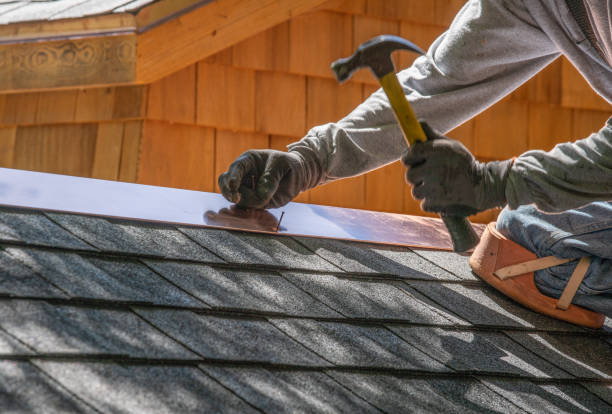
Copper Roofing System Shingles
There are basically 2 various types of copper roofing system you can purchase, there is the solid copper roof that consists solely of sheet copper on your roofing. All in all, the cost is likely to work out less than a slate roofing system but as soon as the copper roof shingles have aged and been weathered they will take on the splendid green appearance that just copper can develop.
Can I use copper roofing shingles?
Among the advantages that copper roofing system shingles offer over other types of long-term roofs, especially the strong copper roofing system, is that the shingles are actually remarkably light and most structures and roofing systems can typically cope with the load admirably. As long as you are prepared to pay around $4 per square foot (compared to $1 for standard asphalt but as much as $15 for strong copper) there is unlikely to be any great reason you can not utilize copper roofing system shingles on your roofing.
Asphalt roof shingles will generally only last 20 years, however covered in copper sheeting the life of the asphalt shingles can easily be extended to between 30 and 40 years. Clearly the copper roofing system shingles themselves will only last as long as the asphalt roofing shingles that are discovered beneath the copper.
The cost of copper roofing shingles.
Copper roofing system shingles are by no suggests a low-cost alternative to other designs of roof but if you like the look of copper and you want a longer life than asphalt shingles can offer then copper roof shingles are an excellent option. On an annual basis copper roof shingles do work out not general however inexpensive and not for the initial installation.
Standard asphalt roofing shingles usually cost around $1 per square foot, whereas solid copper roof will set you back around $15 per square foot. Copper roofing shingles are available at around $4 to $5 per square foot so they are 4 times more expensive than asphalt however substantially cheaper than a full strong copper roofing. Nevertheless, you are certainly spending for the appealing looks of a copper roofing system however for less money than covering the whole roofing system in an expensive metal.
There are essentially 2 various types of copper roofing system you can buy, there is the strong copper roofing that consists entirely of sheet copper on your roof. Clearly the copper roof shingles themselves will just last as long as the asphalt roofing system shingles that are discovered beneath the copper.
Copper roof shingles are by no suggests a cheap alternative to other designs of roofing however if you like the appearance of copper and you desire a longer life than asphalt shingles can offer then copper roofing shingles are an excellent choice. Copper roofing system shingles are readily available at around $4 to $5 per square foot so they are 4 times more pricey than asphalt however significantly more affordable than a full solid copper roofing system.
Roof Installation Contractors near Great Meadows 07838

Call 888-347-0551 Now!
Our expert Roof Installation Contractors in Warren County provide Expert Roofing Services. If you have any questions or concerns about our service area, please give us a call today. We are competitively priced in this area for Roof Installation because we are confident that you will be thrilled with how your roofing project will turn out. Again, call today to schedule a consultation for your roofing project.
Elastomeric Roof
Elastomeric roofing or rubber roof, as it is typically called, is one type of synthetic roof material that is a composition of recycled rubber. This rubber is being chipped off in the rubber mill and the small chips are mixed with different chemicals to produce the RRPV (Recycled Rubber Poyurethane Elastomer) or the EPDM (Ehtylene Propylene Diene Monomer).
To do the installation of elastomeric roofing, it needs to have an underlayment. Before the construction work is left for the day, roofing contractors ought to have currently ended up using the membrane roofing underlayment.
Elastomeric roof may be applied with elastomeric covering in liquid form and "rubber-like" protective membranes. Appropriate covering selection should be done, as not all elastomeric finishes are the same. Your roofing expert can get you the finest suggestions on this.
roofing, elastomeric roof is 100% percent water resistant since of its anti-porous home. It is also fireproof and a single-ply application is all that is required. Because of its UV filtering ability, the material is able to withstand against ultraviolet radiation, gases, and even snow and ice. This type of roof material can last from 40 years onwards, depending on the toughness of the rubber.
Do not ever believe of using this type of roofing product if you live in a location where temperature level can go as low as 20 degree Celsius. Elastomeric roofings are not extremely versatile in low temperature levels. Have other alternatives ready, or consider shifting to another place if you would really like to use rubber roof for your building.
Elastomeric roof or rubber roofing, as it is frequently called, is one type of synthetic roof material that is a composition of recycled rubber. To do the installation of elastomeric roofing, it needs to have an underlayment. Elastomeric roof might be used with elastomeric finish in liquid form and "rubber-like" protective membranes. As compared to clay tile roof, elastomeric roofing is 100% percent waterproof since of its anti-porous residential or commercial property.
Tri State Roofers of Great Meadows, NJ 07838
Tel:888-347-0551
Roof Installation Contractors Rating: 4.2 stars out of 92 Reviews
Main address: PO Box 783546 Great Meadows, NJ
United States
Find a Roof Installation Contractor for buildings of all types from homes of all sizes to condo complexes, apartment buildings and offices in Great Meadows, NJ